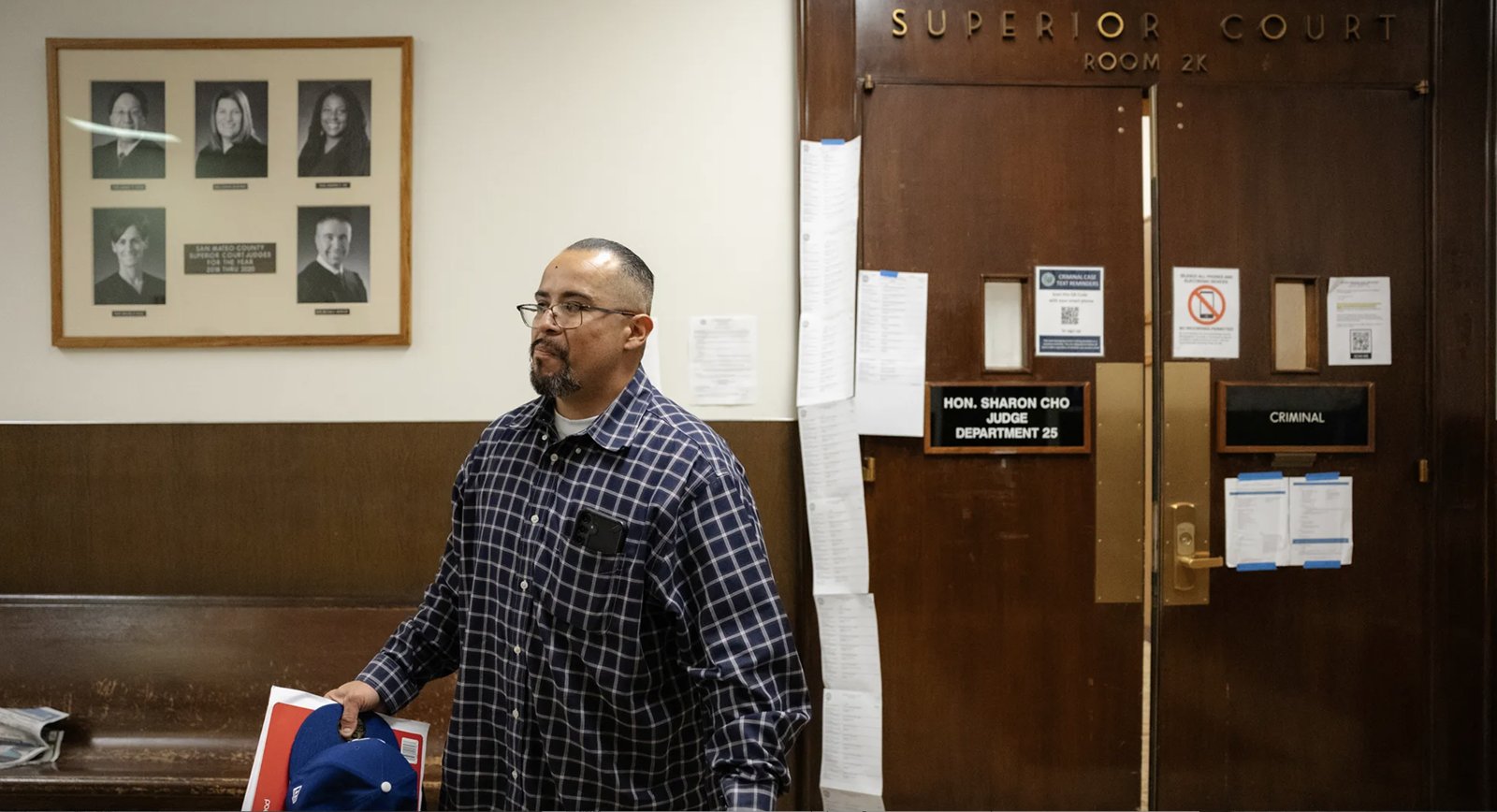
Gustavo Meza exits the courtroom after presenting a progress report to a judge at the San Mateo County Superior Court Southern Branch in Redwood City on June 18, 2026. Meza was mandated treatment under Proposition 36. Photo by Manuel Orbegozo for CalMatters
The tough-on-crime initiative California voters passed two years ago wasn’t supposed to be a draconian return to mass incarceration. Instead, it promised to help people get better by diverting drug offenders into addiction treatment instead of prison.
To see if Proposition 36 was making good on that promise, CalMatters analyzed data from the 15 counties that have filed the most cases under the new law.
We found that people the measure was supposed to help appear to be falling through the cracks in large numbers. In some counties, a small fraction of those arrested for drugs under the law’s new “treatment-mandated felony” are actually getting treatment through Prop. 36. Even fewer are graduating their programs and having their charges dropped.
We found that counties are implementing the new law, which also increased penalties for certain shoplifting cases, in wildly different ways. The amount of time defendants must stay in treatment to have their drug charges dropped varies from…